Chimney and step flashing
Masonry joints and roof-to-wall transitions can admit wind-driven rain even when nearby shingles look intact.
Older homes and varied rooflines
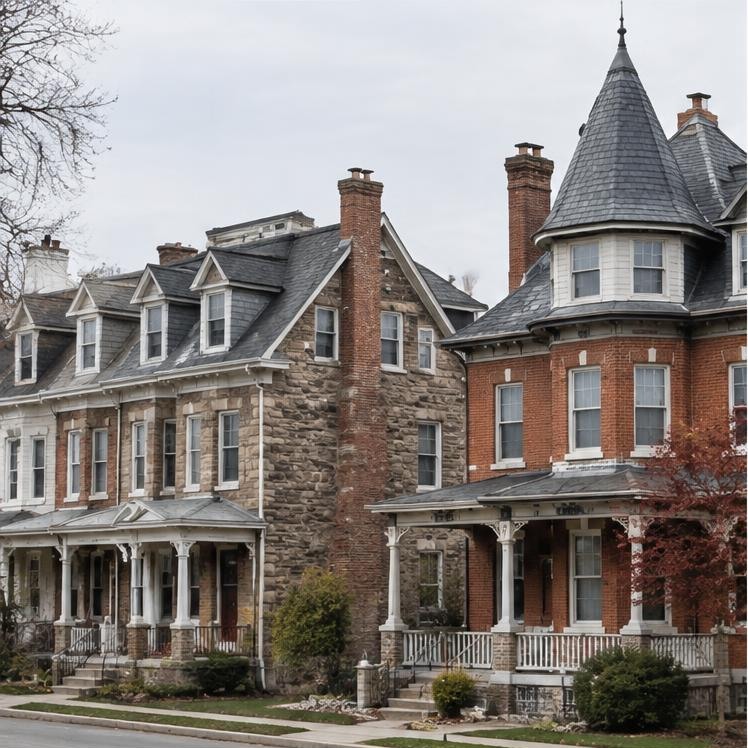
Pottstown has no single roof type. Borough blocks include attached homes, detached houses, masonry chimneys, steep roof sections, low-slope additions, and roof-to-wall joints. A useful inspection follows each transition instead of treating the roof as one flat surface.
A local roof plan
Older does not automatically mean replacement. The inspection should separate a repairable detail from wider roof-system wear.
Older construction can also hide more than the top layer shows. Previous repairs, aging flashing, multiple roof layers, and soft decking may only become clear through close inspection or during tear-off. The right next step depends on where water enters and how much of the roof system is affected.
Use this page to sort repair from replacement, then send the property ZIP and problem. Coverage is confirmed before a local partner roofer accepts the request.
What deserves a closer look
Masonry joints and roof-to-wall transitions can admit wind-driven rain even when nearby shingles look intact.
Water concentrates where roof planes meet. Low-slope additions need details suited to their pitch.
Tear-off can reveal damaged or uneven deck areas that could not be judged from the yard.
Shared or closely joined structures require careful boundary, drainage, and access planning.
Repair or replacement
A sound roof with one failed boot, flashing joint, or small wind-damaged area may fit a focused repair. Broad granule loss, repeated leaks, widespread brittle shingles, or failing decking can make replacement the stronger long-term choice.
Pottstown has historic districts and a Historic Architectural Review Board. Requirements depend on the property and project scope, so owners should verify current borough rules before work starts.
Check Pottstown historic review informationRelated roofing help
Find the source and scope of isolated roof damage.
Open guide →Compare full-system materials and tear-off steps.
Open guide →Trace rain entry through flashing, valleys, and penetrations.
Open guide →Take safe first steps when water is actively entering.
Open guide →Straight answers
Often, yes. A roofer needs to check the shingles, flashing, decking, and nearby transitions before deciding whether a focused repair is dependable.
Sometimes. It depends on the flashing design, masonry condition, and the condition of the shingles around the chimney.
Common paths include worn flashing, valleys, pipe boots, old penetrations, low-slope additions, and roof-to-wall joints.
Requirements depend on the work. Verify the current rule with the Borough of Pottstown before construction.
A roof inspection can document visible conditions, likely weak points, and questions that may need closer review.
Check the exact address
Share the property ZIP and the roofing problem. Coverage is confirmed before a local partner accepts the request.