Step flashing
Individual pieces should work with each shingle course along a wall or chimney.

Practical repairs for compact properties
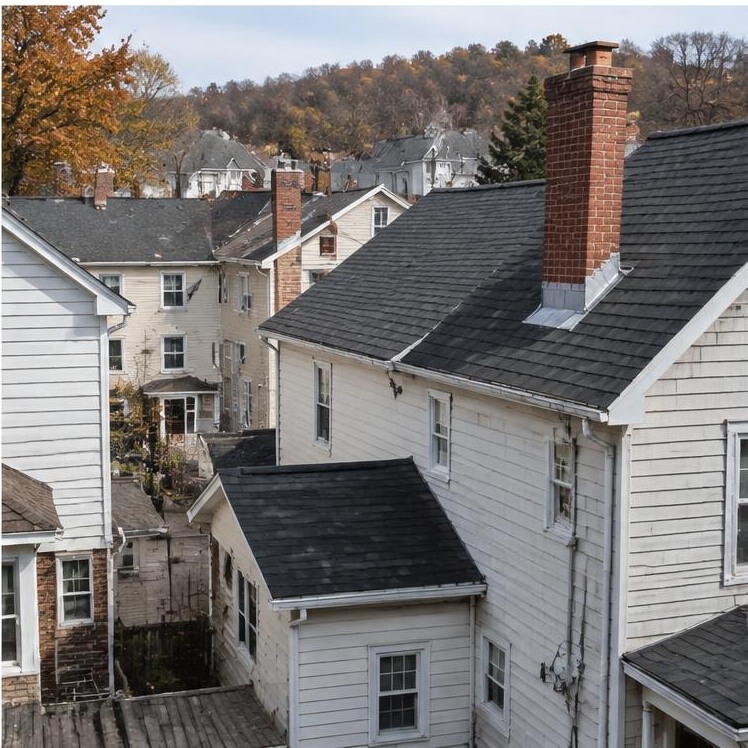
Stowe and West Pottsgrove properties can pack several roof details into a small footprint. Chimneys, additions, short valleys, roof-wall intersections, and closely spaced neighboring homes can make a ‘small roof’ technically demanding.
A local roof plan
This page puts flashing first because the repair must follow the way water moves around masonry and adjoining roof planes.
Water around a chimney may come through step flashing, counterflashing, mortar joints, a cricket, or shingles uphill from the masonry. Smearing sealant over the visible gap may hide the clue without rebuilding the water-shedding detail.
Access and cleanup matter here too. Before work begins, the plan should account for driveways, neighboring property, landscaping, debris movement, and safe material placement.
What deserves a closer look
Individual pieces should work with each shingle course along a wall or chimney.
The upper flashing protects the step flashing edge where it meets masonry.
Short valleys and additions can concentrate runoff in tight spaces.
Water can move from decking to insulation, drywall, and framing before a stain grows.
Repair or replacement
Active water calls for safe containment first, followed by an exterior diagnosis. Do not puncture a bulging ceiling unless emergency professionals determine it is safe.
West Pottsgrove lists roof replacement among work requiring a permit. Confirm the latest application and inspection requirements with the township for your project.
Check West Pottsgrove permit FAQRelated roofing help
Trace rain entry through flashing, valleys, and penetrations.
Open guide →Find the source and scope of isolated roof damage.
Open guide →Take safe first steps when water is actively entering.
Open guide →Compare full-system materials and tear-off steps.
Open guide →Straight answers
The township lists roof replacement as work requiring a permit. Confirm current rules and forms directly with the township.
Often, but the roofer must identify whether the problem is step flashing, counterflashing, masonry, or the surrounding roof.
Yes. Flashing, valleys, vents, fasteners, and roof-wall joints can leak while shingles remain in place.
Wind direction, masonry absorption, flashing details, and concentrated runoff can make the leak weather-specific.
As soon as it is safe. Contain interior water, avoid wet electrical areas, and call for help.
Check the exact address
Share the property ZIP and the roofing problem. Coverage is confirmed before a local partner accepts the request.