Only in wind-driven rain
Check sidewalls, chimney sides, lifted seals, and exposed roof edges.

Follow water uphill
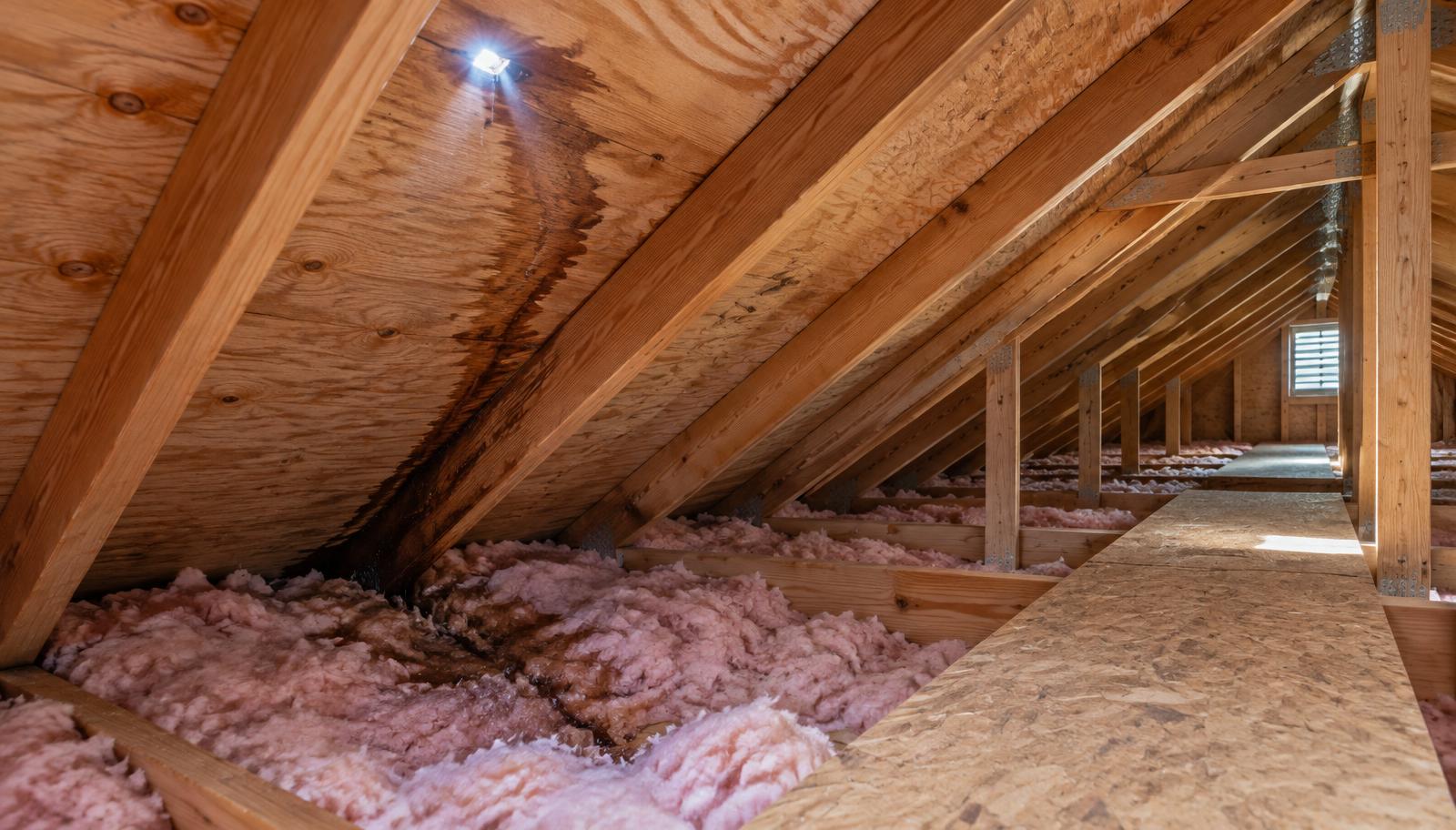
The ceiling mark tells you where water stopped—not always where rain entered.
10-second roof lesson
Takeaway: A small split at a pipe boot can admit wind-driven rain.
Attic water-path guide
Rain gets through a split boot, lifted shingle, open seam, valley, or flashing joint.
Water meets roof decking and may run sideways or downhill before it drops.
Wood framing, nails, pipes, and wires can redirect the water path.
Insulation can hold and spread moisture, hiding the source for days.
A stain or drip finally appears below—sometimes several feet from the opening.
Write down when water appears. Timing narrows the inspection path.
Check sidewalls, chimney sides, lifted seals, and exposed roof edges.
Check eaves, valleys, attic heat loss, and places where meltwater can back up.
Check roof penetrations, worn valleys, and repeated patch areas.
Check plumbing, bath vents, condensation, and HVAC before blaming the roof.
Map the stain, moisture edge, attic evidence, and rain conditions.
Trace rafters, nails, pipes, and decking uphill from the visible damage.
Inspect the matching roof area and test details without flooding the home.
Straight answers
Active water, loose materials, or an exposed roof opening need prompt attention. Keep people away from wet ceilings and do not climb onto the roof.
Roof size, height, slope, access, material match, hidden deck damage, flashing details, and the amount of safe tear-off all affect a written quote.
Yes. Your request goes to one local partner roofer. Their name is shared when they contact you to arrange the visit.
No. Coverage depends on your policy and the cause of damage. Your insurance company makes that decision. Dated photos and a clear inspection record can help.
Tell us where the mark appears, when it grows, and whether the attic is safely accessible.