
Pottstown chimney leak guide
Chimney Flashing Repair in Pottstown, PA
Water stains near a chimney are one of the most common roof leaks. This guide explains why and how a proper repair works.
Short answer: most chimney leaks come from the metal flashing where the roof meets the brick. A lasting fix uses layered step and counter flashing, not just a bead of caulk.
Why Chimneys Leak So Often
A chimney is a box of brick that sticks up through the roof. Brick and roof shingles move in different ways with heat and cold. Water runs down the roof and hits the chimney on the high side.
That meeting point needs special metal pieces called flashing. When flashing is old, loose, or put in wrong, water finds its way inside.
Many homes around Pottstown have older brick chimneys. Older mortar and many years of freeze and thaw make these spots extra important to check.
Signs of a Chimney Flashing Leak
You may not see the problem on the roof. Look for these clues inside and out.
- Water stains on the ceiling or wall next to the chimney
- Damp or stained wood around the chimney in the attic
- Peeling paint or bubbling drywall near the fireplace
- Rusty, bent, or loose metal at the chimney base
- Thick globs of caulk or tar around the chimney, a sign of past quick fixes
- Leaks that show up only with wind-driven rain
How Chimney Flashing Is Built
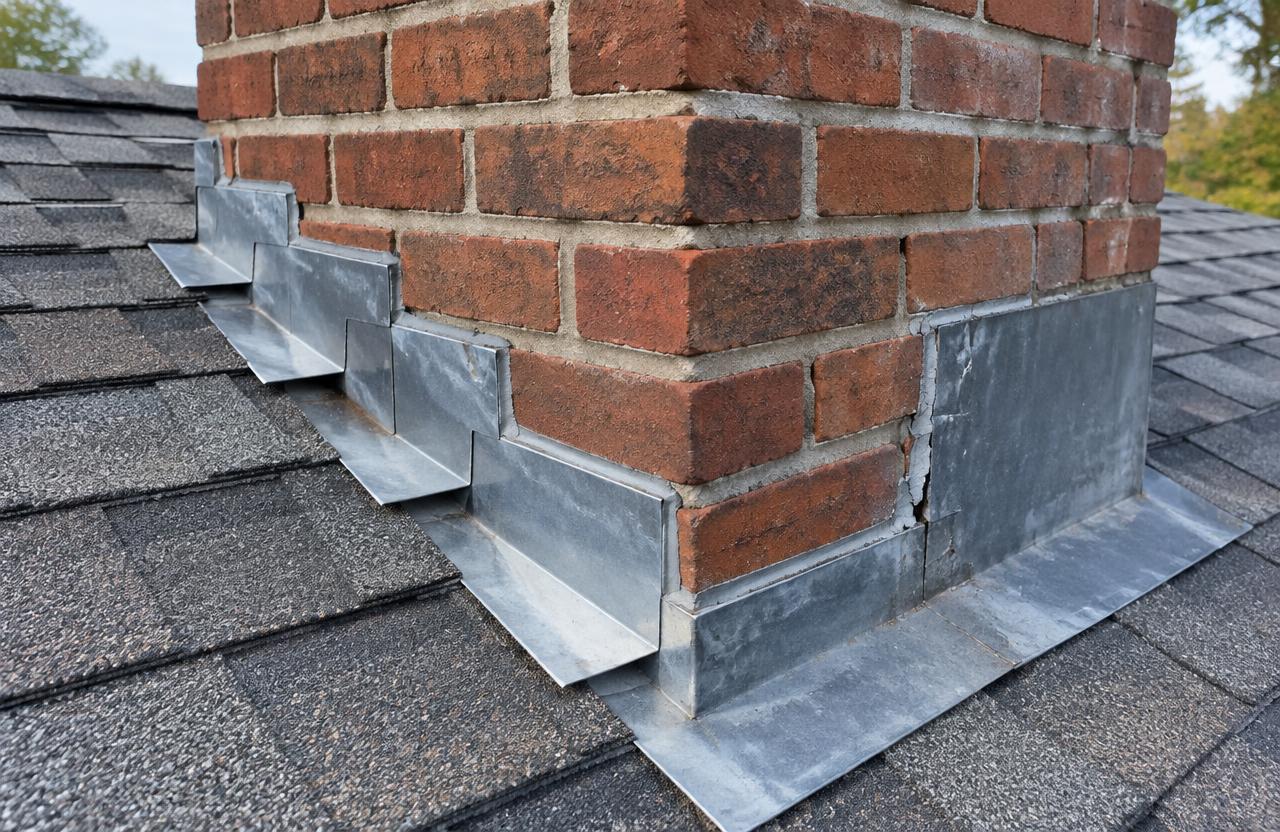
A proper chimney flashing has layers. Each layer sheds water onto the next one, like scales on a fish.
Step flashing
Small bent metal pieces along the sides of the chimney. One piece goes with each row of shingles, so water always runs over, not under.
Counter flashing
Metal set into the mortar joints of the brick. It folds down over the step flashing and covers its top edge.
Front apron
A metal piece on the low side of the chimney that lets water run off onto the shingles below.
Back pan or cricket
On the high side, a pan or a small peaked roof (a cricket) moves water around the chimney instead of letting it pool.
Why Caulk-Only Patches Fail
Caulk and roof tar look like a fast fix. But they crack as the roof heats and cools. Sun dries them out. Within a season or two, water gets behind them again.
Caulk also hides the real problem. If the flashing is missing or put in wrong, sealing the top edge does not fix how water flows underneath. Caulk has a small job in a real repair, but it should never be the whole repair.
Think You Found the Problem?
Send us what you're seeing.
- 1Enter your ZIP
- 2Describe the problem
- 3Add roof photos
- 4Get connected with the local roofing partner for your area
Is It the Flashing, the Brick, or the Cap?
Not every chimney leak is a flashing leak. A good roofer checks each part.
- Flashing: the metal at the roof line
- Mortar joints: cracked or missing mortar lets water soak into the brick
- Brick face: soft or broken brick can let water through
- Chimney crown: the cement top can crack and let water into the chimney
- Chimney cap: a missing cap lets rain fall straight down the flue
How a Roofer Diagnoses the Leak
First they look in the attic to see where water shows up and how far it spread. Then they check the outside, side by side.
Sometimes a careful water test is used. Water is run on one part at a time, starting low, while someone watches inside. This shows which part is failing.
Repair Choices
The fix depends on what failed.
Reset or reseal
If the flashing is good but loose at one spot, it may be reset and sealed. This is the smallest repair.
New counter flashing
The roofer cuts a slot into the mortar joint and sets new metal into it. This is cleaner and lasts longer than surface-mounted strips.
Full re-flash
Shingles around the chimney come up. New step flashing, counter flashing, apron, and back pan go in. This is the best fix for old or wrong flashing.
Add a cricket
Wide chimneys often need a cricket on the high side so water does not pool. This can be added during a re-flash.
Repair Now or Wait for a New Roof?
If your roof is fairly new, fix the chimney flashing now. If the roof is near the end of its life, it may make sense to re-flash during the full replacement.
Either way, do not let a chimney leak sit. Water near a chimney can rot framing and stain ceilings fast.
Straight answers
Chimney Flashing Repair Questions
Can I just add more caulk around my chimney?
It may slow a leak for a short time. It does not fix missing or wrong flashing, and it usually cracks again.
Does chimney flashing get replaced with a new roof?
It should. Reusing old chimney flashing on a new roof is a common cause of leaks. Ask for new flashing in your quote.
Do I need a chimney sweep or a roofer?
Flashing at the roof line is roofer work. Crown, flue, and inside chimney issues may need a chimney professional. Some leaks need both.
Why does my chimney only leak in some storms?
Wind can push rain sideways into weak spots. That is common with worn counter flashing or open mortar joints.
Get a Clear Answer for Your Roof
Tell us what you see. One local partner roofer serving Pottstown will follow up to look at the roof and explain the exact scope and price.