
Protect operations with a documented roof plan
Commercial Roofing in Pottstown, PA
Commercial roof work must account for tenants, equipment, drains, access, safety, and business hours—not only the visible leak.
Interior water near equipment, inventory, or electrical systems needs immediate controls.
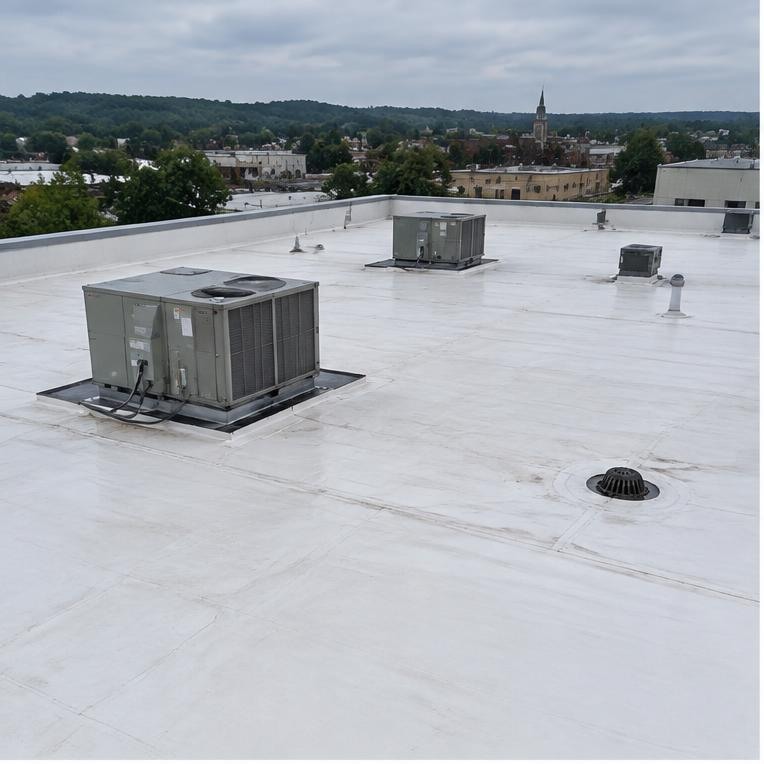
How roof water travels: see roof leak repair; for the repair process and general questions, see roof repair.
General failure examples
What a Pottstown Commercial Roofing Inspection Checks
These educational examples show common roof weak points. They are not photos of a local customer’s home.
01
Ponding water
Water that remains after rain can load the roof and stress seams and flashings.
02
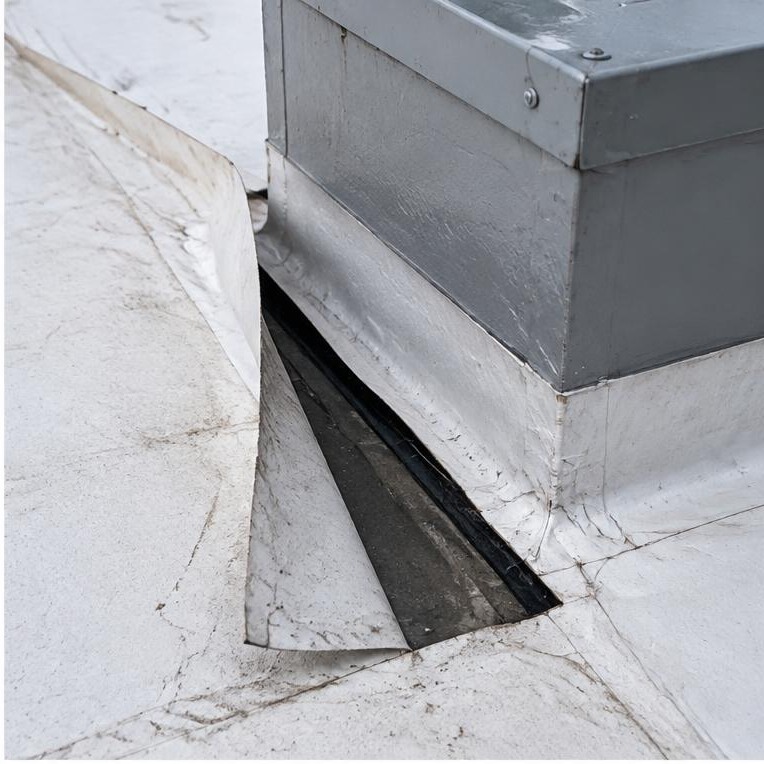
Open membrane seam
Movement and foot traffic can separate laps around the roof field.
03
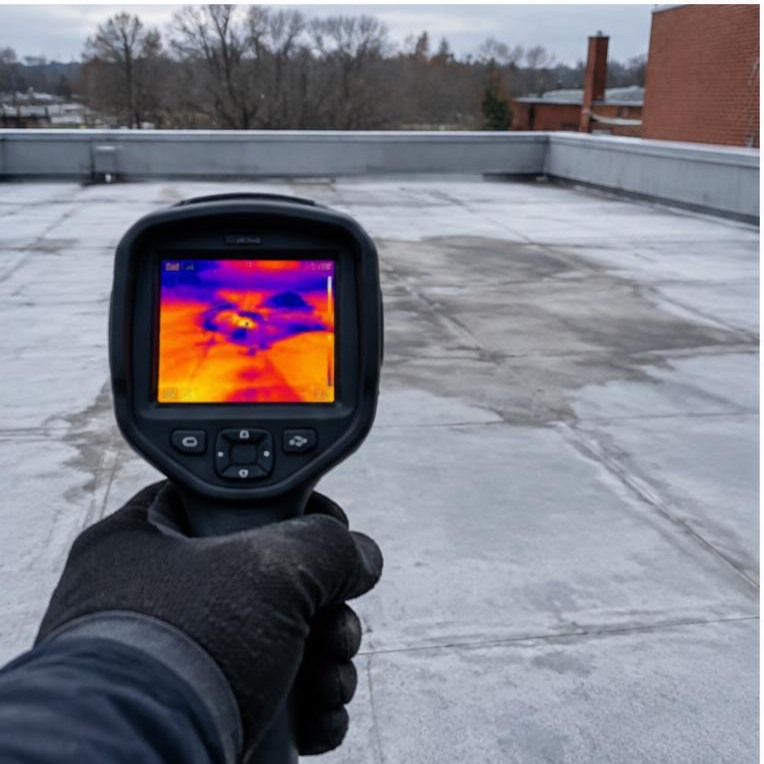
Wet insulation
Moisture below the surface can spread beyond the visible opening.
04
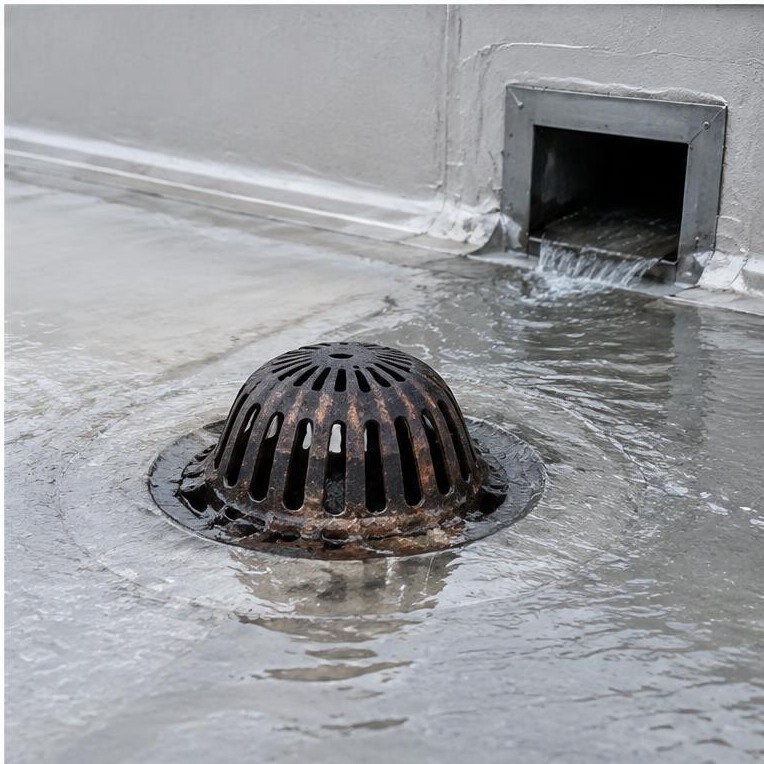
Blocked drain
Leaves and debris can slow drainage around internal drains and scuppers.
Repair or replace?
Commercial Roofing in Pottstown: Repair or Replace?
| Question | Repair fits when | Replacement fits when |
|---|---|---|
| Condition | Moisture is contained and compatible repairs can tie into a serviceable system. | Wet insulation, seam failure, or aged membrane is widespread across the roof. |
| Price factors |
Exact pricing requires an inspection. This site does not post made-up flat prices. | |
Low-Slope Roof Systems on Pottstown Buildings
Most shops, offices, and apartment buildings have flat or low-slope roofs. These roofs use large sheets, called membranes, instead of shingles.
TPO
A white or light sheet with heat-welded seams. It reflects sun and is common on newer commercial roofs.
EPDM
A black rubber sheet with glued or taped seams. It has been used on low-slope roofs for many years.
Modified bitumen
Layered asphalt sheets, often on older buildings and small additions.
Metal
Panels used on some warehouses and shop buildings. Fasteners and seams need regular checks.
Finding Commercial Roof Leaks
On a big flat roof, water can travel far under the membrane before it drips inside. A leak over aisle 3 may start near a rooftop unit 30 feet away.
A good leak search checks seams, rooftop unit curbs, pipe flashings, drains, edges, and walls. Some roofers use moisture tools to find wet insulation. Each finding should have a photo and a marked roof plan.
Ponding Water and Drainage
Water that sits on a flat roof for days is called ponding. It adds weight, wears seams, and finds small holes.
- Keep drains, scuppers, and gutters clear of leaves and debris
- Watch for low spots after heavy rain
- Ask about tapered insulation to move water to drains during replacement
- Check that downspouts carry water away from the building
Maintain, Repair, Restore, or Replace?
Building owners have more choices than homeowners. The right one depends on how wet the roof is and how long you plan to own the building.
Maintenance
Twice-a-year checks and drain cleaning help catch small problems early.
Repair
Fixing seams, flashings, and punctures when the rest of the roof is sound.
Restoration
Some roofs can get a coating if the insulation below is mostly dry. A survey decides that.
Replacement
When insulation is widely wet or the membrane is worn out, a new system is often the better long-term buy.
For Building Owners and Property Managers
Share the building address, the roof type if you know it, and where leaks show up. Photos of ceiling tiles, rooftop units, and drains help. One local partner roofer will follow up to plan an inspection that fits your tenants and hours.
Commercial roofing in Pottstown, PA and nearby towns:
- Pottstown
- Lower Pottsgrove & Sanatoga
- Upper Pottsgrove
- Stowe & West Pottsgrove
- North Coventry
- Gilbertsville
- Boyertown
- Limerick
- Royersford
- Collegeville
Related Pottstown roofing guides
Get a Clear Roof Plan
Tell us what you see. One local partner roofer will follow up about the inspection and exact scope.