Masonry transitions
Chimney flashing and mortar joints need separate checks because either can admit water.
Older borough properties and careful repairs
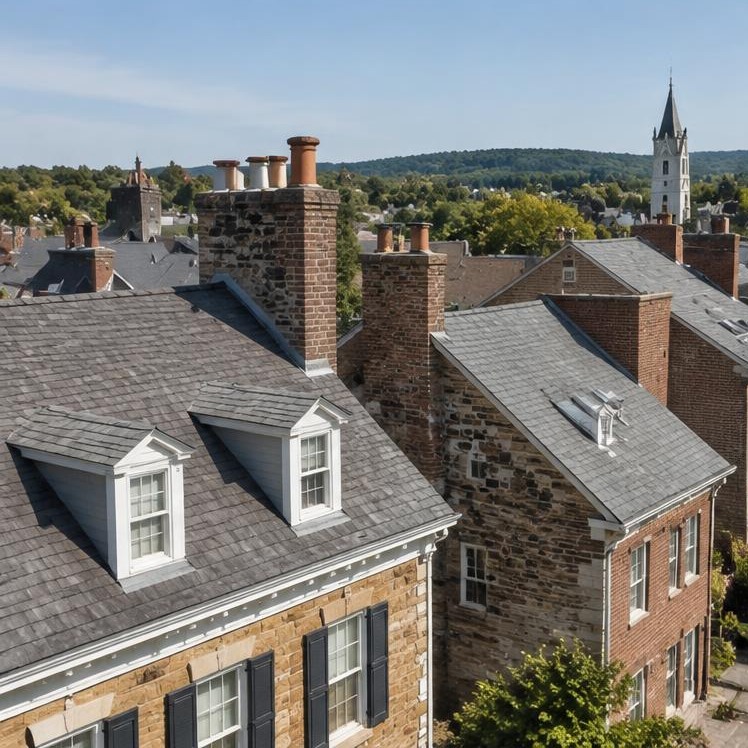
Boyertown's development reaches back into the 1800s, giving the borough a real older-building context. Roof work may involve masonry chimneys, additions built at different times, old decking, and several generations of flashing or repair details.
A local roof plan
Older structures deserve careful investigation, not assumptions based only on age or appearance.
Preserving a home's character does not mean preserving a failed roof assembly. Modern underlayment, ventilation, flashing, and shingles can be planned around the building's roof form while correcting weak transitions.
The most important evidence may be hidden until tear-off. Estimates should explain how unexpected decking or layered conditions will be handled instead of pretending they cannot exist.
What deserves a closer look
Chimney flashing and mortar joints need separate checks because either can admit water.
Changes in pitch and roof age can create complex valleys and tie-ins.
Board or aged sheet decking may need selective or broader repair after tear-off.
Profiles and colors can respect the roof form while using a modern approved system.
Repair or replacement
A responsible replacement plan explains deck inspection, change approval, flashing reconstruction, and ventilation before the old roof comes off.
Boyertown was incorporated in 1866 and has older structures, but this site does not claim every home is historic. Property-specific requirements should be checked with the borough.
Check Boyertown Borough historyRelated roofing help
Find the source and scope of isolated roof damage.
Open guide →Trace rain entry through flashing, valleys, and penetrations.
Open guide →Compare full-system materials and tear-off steps.
Open guide →Review shingle wear, wind damage, and replacement options.
Open guide →Straight answers
Often, yes, when the deck, slope, ventilation, and flashing details support the selected system.
The damaged area is documented and an approved repair plan is set before the new roof covers it.
Possible causes include flashing, mortar joints, caps, porous masonry, and nearby roof transitions.
Sometimes. The masonry must be sound enough to accept the correct flashing detail.
Timing depends on size, slope, access, weather, decking repairs, and material. Exact timing follows inspection.
Check the exact address
Share the property ZIP and the roofing problem. Coverage is confirmed before a local partner accepts the request.